 Cam Music
Cambridge concerts follow the university year
Most Cambridge concerts are timed by the university calendar, not by the seasons, and the rhythm of Cambridge concerts through the year follows the terms closely. The city has three short terms: Michaelmas from early October to early December, Lent from mid-January to mid-March and Easter from late April to mid-June. Each Full Term lasts about eight weeks, and those weeks are where music in Cambridge gets busiest. Every college has a chapel, most chapels have a choir, and student orchestras, opera groups, jazz bands and a cappella groups all plan their seasons around the same eight-week blocks.
The weeks between terms feel different. Chapel choirs go on tour or rest, student ensembles stop rehearsing, and the professional venues carry the programme on their own: touring orchestras, rock and pop at the Corn Exchange and the Junction, and in summer the open-air season, with the Cambridge Folk Festival at Cherry Hinton Hall as its best-known weekend. Anyone looking for music in Cambridge in late July will find a very different city from the one a visitor sees in November.
Two moments break the pattern. Christmas fills the chapels with carol services in late November and early December, before the students leave. And after the exams in June comes May Week, which despite the name sits in June: a run of college balls, garden parties and outdoor concerts, when chapel choirs, jazz bands and student orchestras play their last dates of the academic year.
| Period | Roughly when | What is on |
|---|---|---|
| Michaelmas Term | Early October to early December | Full chapel season, student orchestras' first concerts, Advent and carol services at the end of term |
| Christmas vacation | Mid-December to mid-January | Carol broadcasts from King's on Christmas Eve, then a quiet city; touring shows at the big halls |
| Lent Term | Mid-January to mid-March | Chapel music resumes, the busiest stretch for student opera and large choral works |
| Easter Term | Late April to mid-June | Exam season keeps it lighter, then May Week concerts and outdoor events in June |
| Long Vacation | Late June to September | Open-air concerts, the folk festival weekend, visiting choirs in the college chapels |
College chapels: the heart of music in Cambridge
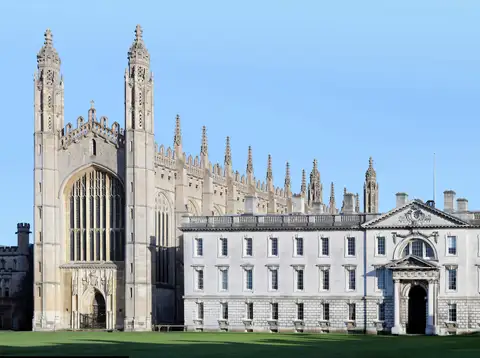
The thing that sets Cambridge apart from other cities of its size is the sheer number of chapel choirs singing several services a week, free of charge. King's College Chapel is the famous one, and its choir sings choral evensong on most days of term. St John's, Trinity, Clare, Gonville and Caius, Jesus, Selwyn and many other colleges keep their own choirs, some with boy or girl choristers from choir schools, most made up of undergraduate choral scholars. A visitor who arrives with no tickets and no plan can still hear first-rate choral singing almost any evening in term.
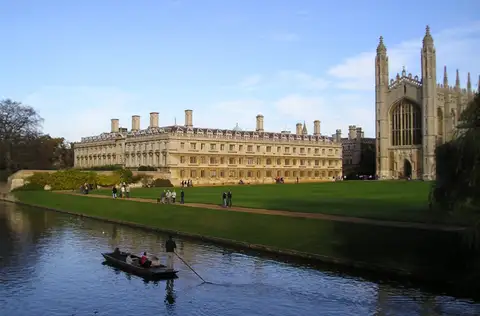
The services are acts of worship, not concerts, and they are open to everyone. The college websites publish a termly list of services and music, and the King's College page on attending chapel services sets out the house rules most chapels share: arrive in good time, because latecomers are not admitted once a service has begun; keep bags small; and do not photograph or record. Several chapels also host concerts in their own right, from organ recitals to visiting ensembles, and those are ticketed like any other event.
Orchestras, choirs and ensembles to look out for
The Cambridge University Musical Society, founded at Peterhouse in 1843, is the umbrella for the university's main orchestras and its large chorus, and its concerts are among the most ambitious student performances in the country. The Academy of Ancient Music, one of Britain's leading period-instrument orchestras, has been an ensemble in residence at the university's Faculty of Music since 2004 and brings concerts to West Road Concert Hall each season. Beyond them sits a long list of college music societies, chamber groups, student-run opera companies and jazz ensembles, many of whose concerts cost little or nothing.
Smaller and quieter rooms matter too. Kettle's Yard, the house and gallery on Castle Street, has held concerts since 1970, when Jacqueline du Pré and Daniel Barenboim gave the opening performance, and its chamber music series runs on Thursdays during term. Great St Mary's, the university church on the market square, has a series of free lunchtime concerts on Fridays outside the late-summer months. For an hour in the middle of the day, they are the easiest way to sample music in Cambridge without planning anything.
The main concert venues
The big rooms each have a clear role. The Cambridge Corn Exchange, a Victorian grain market that opened in 1875, is the city's largest seated and standing venue, with room for up to around 1,850 people depending on the layout; it takes touring orchestras, comedy and most of the large rock and pop shows. West Road Concert Hall, the university's 499-seat hall, is the home of classical music in the city and is known for its acoustics. The Junction, south of the station, is the place for indie bands and club nights. Cambridge Arts Theatre, founded by John Maynard Keynes in 1936, adds opera and musical theatre to its drama programme.
A little further out, Storey's Field Centre in the Eddington district is a small hall with a strong acoustic, and Saffron Hall in Saffron Walden, about twenty minutes south by train, has become one of the best-regarded concert halls in the region since it opened in 2013. Both are worth the trip for chamber and orchestral music.
Finding concerts in Cambridge: where the listings are
No single list covers all Cambridge concerts, so it helps to know who publishes what when you are looking for concerts in Cambridge. The venues publish their own programmes: the Corn Exchange, the Junction and the Arts Theatre for touring shows, West Road and the Faculty of Music for classical concerts. The colleges publish their chapel term cards. Student concerts tend to appear on posters around the colleges and on the university's events pages first, and then on general listings sites. For the folk weekend in summer, the Cambridge Folk Festival's visitor pages are the place for dates, tickets and travel.
A sensible routine for a visitor is to check the chapel lists first, because they are free and cannot be booked anyway, then look at the three or four big halls, and finally add a lunchtime recital or a Thursday at Kettle's Yard. That combination gives a full picture of concerts in Cambridge in a few days.
A practical guide to a concert evening
Most venues sit within a short walk of the market square, and the Corn Exchange and the Arts Theatre are almost next door to each other. West Road is on the western side of the river, a ten-minute walk from the centre, and the Junction is close to the railway station. Evening chapel services tend to start in the late afternoon or early evening, so it is perfectly possible to hear evensong and still reach a concert later the same night.
Booking habits differ by venue. Chapel services are free and unbookable, apart from a handful of special occasions such as the Christmas Eve service at King's, whose tickets are now allocated through an online ballot. Student concerts usually sell at the door. The big halls sell out for popular tours, so book those early. And in May Week and at Christmas the city fills up, which makes accommodation the thing to sort out first.